


This $100 Million Vape Company Is A Pillar Of The Cannabis Industry
Alex Kwon did not set out to build one of the largest vaporizer companies in the cannabis industry. It started out as a side project to help his East Wenatchee, Washington-based cannabis extracts company, Sungrown, stand out in the crowded market. But six weeks after launching a new a vape cartridge in November 2018, the product generated $1.6 million in revenue—and Kwon knew he had a real business.
“That was the moment that I was, like, ‘We should do something with this,’” the 41-year-old Kwon tells Forbes.
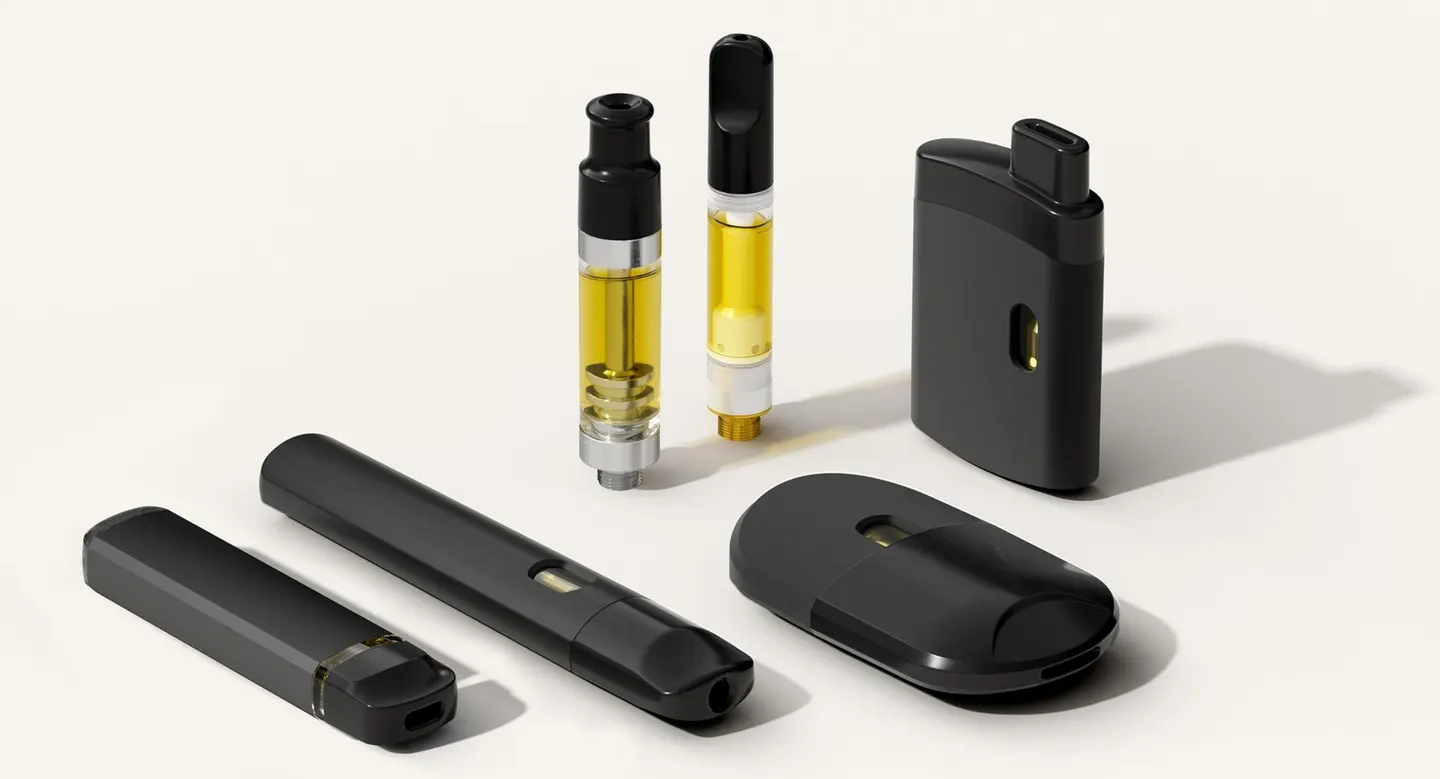
It’s taken years and tens of millions of dollars spent on lawsuits—including a falling out with his business partner and a patent infringement case levied by one of China’s biggest vape manufacturers—but Active now controls an estimated 20% of the vape hardware market and generates an estimated $100 million in annual revenue by selling its devices to some of the biggest companies in the $30 billion (est. 2025 revenue) cannabis industry—from Trulieve to Curaleaf to Jeeter—who fill those devices with their own THC oil.
“We have gotten run over by a bus seven times,” says Kwon as he pops a Zyn in his mouth. “Somehow we’re still here and still growing.”
While Kwon still owns Sungrown, which generates about $20 million in annual revenue by selling cannabis flower, vapes, pre-rolls and gummies under a suite of brands, eight-year-old Active is his biggest company. Vapes are the second-best selling category in the U.S. cannabis market with $6 billion in sales in 2024. Flower remains the top seller with $9 billion in sales over the same period.
Raised in the Chicago suburbs, Kwon is the first in his family to be born in the United States. His parents, who ran a wholesale clothing business in the city, and older brother were from South Korea. As the second born, Kwon was the “rebel,” while his brother, Sung, was the responsible one.
“I told myself for a long time that all the good in me is him and all the bad in me is me,” says Kwon. “I was the kid who always got in trouble, the hell raiser.”
Kwon smoked weed for the first time in fifth grade, shoplifted candy with his friends, and once stole his older brother’s car. But he took sports seriously—he was a star safety on his high school football team and wrestled. For his entire childhood, Kwon thought he would grow up to become the “first 100% Korean American in the NFL,” he remembers.
But on a snowy evening in January 2000, Sung did not show up as planned to drive him home from wrestling practice. Kwon hitched a ride home and waited, but soon a police officer knocked on the door and asked if his parents were there. It was about his brother. Once his parents arrived, the cop explained that their son was in a car accident and was at the hospital. A doctor met them in a small room and told them the news: Sung had died in the crash.
After the funeral, Kwon’s parents “lost all control” of him, he recalls, and he started sleeping over his friend Mike Sabatello’s house, diving headlong into football, weed and mushrooms. (Sabatello currently works at Sungrown.) He graduated high school and got into college at the University of Illinois Chicago, where his brother had studied computer science. After classes, Kwon studied hapkido and taekwondo, getting his fourth-degree and second-degree black belt respectively.
By 2006, he dropped out of college and one day, a college buddy called from California, where he was developing land and needed help from someone he could trust. “All I knew was that it had to do with clearing some land,” says Kwon. “I had no idea it was about weed.”
The following year, Kwon moved to California. It was still 10 years before recreational marijuana would be legal in the state, when Humboldt was the center of the weed world. Quickly, Kwon realized that they were clear cutting trees on acres of land to build grow houses for illegal grows, or at best quasi-legal under the state’s loosely regulated medical marijuana program. They learned that this business ran on one rule: “honor among thieves,” says Kwon, who started a new land development business with his friend, Humboldt Consulting Group. They would develop land for an owner, install irrigation systems and greenhouses, or buy the land themselves and rent it out to growers. His first paycheck was more than he had ever made in a year—$30,000—for a week of work. It was a good business to be in at the time, even though they had to be constantly vigilant of law enforcement flying above in helicopters.
“We knew that [our clients] were going to be able to pay us if they got their harvest off,” says Kwon. “We were born in this world, this is where we cut our teeth.”
Humboldt Consulting Group made over $10 million in about six years. Then in 2015, Kwon heard about a distressed, legally licensed pot grower in Washington—which became one of the first states to legalize recreational marijuana in 2012—who was looking for a way out. He wanted to see what the legal cannabis game was like, bought the property and sank a couple million dollars into building a new grow system.
“Oh man, how things change when you go into the legal, licensed cannabis chain,” says Kwon. “I try to tell people that it is not a license to make money; it is a license to invest money.”
Within 10 months, his new company, Sungrown, had 70 employees and its first harvest yielded about 5,000 pounds of weed. But the area, home to apple farmers, had banned cannabis grows. Kwon had to start all over again at a new location. Eventually, Sungrown became profitable and generated just under $6 million in annual revenue its second year in business, and last year it brough in about $20 million.
Kwon started Sungrown with the goal to make THC concentrates for vapes, but he was disappointed with the hardware he was getting from China, which was made for nicotine and did not work as well with THC oil. Kwon partnered with a man named Jonathan Carfield and they started designing and making vapes under a new company called Advanced Vapor Devices (AVD). Within a year, AVD landed one of cannabis’ biggest companies, Trulieve, the Florida-based juggernaut that made $1.2 billion in revenue last year. Trulieve Chief Production Officer Kyle Landrum says the company’s hardware helped Trulieve bring “distinctive new products” to market.
The relationship with Carfield eventually frayed and devolved into a contract dispute in 2021. (Carfield and his business partner and wife alleged that Kwon stole the company from them, among many other allegations.) Kwon ended up winning a judgement in 2023, rebranding the company as Active two years ago, and now the company has factories in Shenzen and Indonesia with about 700 employees. (Kwon and the Carfields are still involved with litigation.) But a bigger legal fight was on the horizon. Also in 2021, Smoore, the Chinese vape hardware giant that made $1.8 billion in revenue last year, brought a patent infringement complaint through the U.S. International Trade Commission against nearly 40 companies, including AVD. Many companies settled, but Kwon decided to fight. It cost about $10 million, but late last year the companies settled.
“If they had won with the broad claims that they're saying they would have had a complete monopoly on the importation of all vaporizers,” says Kwon.
In the meantime, Active kept winning big clients, like the country’s biggest pre-roll brand, Jeeter, for its vape products, and Curaleaf’s vape brand Select, making a new product called the Briq, which holds a hefty two grams of THC oil.
Now Kwon is ready to expand his companies into the burgeoning European market. Late last year, Sungrown bought a majority stake in Denmark-based cannabis processor Valcon for about $3 million, according to a person close to the deal. (Kwon would not comment on the investment.) And Active started selling vape hardware throughout Europe, including to Germany’s largest telehealth platform for medical cannabis patients Bloomwell. Will Muecke, the founder of cannabis investment firm Artemis Growth Partners, had invested in Valcon and reached out to Kwon when it was time to expand the company.
“We identified them as a leader in the field, both on the device side and THC,” says Muecke. “In Europe, the market is missing the vape category. This means companies need the right partner. Sungrown and Active are the experts.”
For Kwon, Europe is another massive growth opportunity, especially for an American company with a proven record. Germany, the EU’s biggest cannabis market with $944 million in sales last year, is barely two years old.
“I believe Europe is the gateway to the rest of the world,” says Kwon. “I think there's potential to be as big or bigger than the U.S.”